
THE SPIRIT OF CHOCOLATE
From Cacao Research to an Immersive Public Experience
THE STORY
It Started With a Story
The project began with a conversation between myself and Mark Guiltinan, whose research into cacao had taken him across Central America documenting the lives, traditions, and changing practices of cacao farmers.
Through interviews, photography, and video, Mark was collecting stories about why people farm cacao, the cultural traditions surrounding it, and how agricultural practices evolved over generations.
My initial idea was to create a digital platform where those stories could live beyond the research itself, a website combining Mark’s photography, video, interviews, and research to introduce a broader public to the people and traditions behind cacao.
The goal was simple: turn research into a story people could experience.
Right: Cacao seeds and White Pulp (Mucilage)
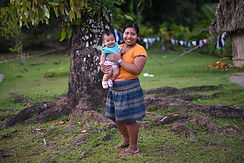
Below: Belizean cacao farmers



THE ARTIFACT
From Digital Storytelling to Physical Experience
The project took a new direction when Mark received a replica of a ceremonial vessel in recognition of his contributions to cacao research.
The vessel created a physical connection to the broader story Mark had been documenting: the cultural history of cacao, the traditions of the people who cultivate it, and the deep roots of cacao in Ecuador and Central America.
Mark’s work had taken him into cacao-growing communities across Central America, where he documented farmers, their experiences, agricultural traditions, and the ways cacao farming had changed over time. The vessel gave us an opportunity to bring those stories together.
Rather than treating it as an artifact to simply display, I began exploring how it could become the centerpiece of a larger public experience, connecting the object, the science, the farmers, and the cultural history of cacao. The project had evolved from a proposed website into something that could be experienced in physical space.
Right: Replica vessel at the Ecuadorian Embassy
Left Below: At the Ecuadorian Embassy photographing the vessel presentation.
Below Right: Early graphic design ideas.


THE VISION
Designing a Permanent Cacao Experience
As the idea developed, Mark and I met with the Penn State Arboretum to explore the possibility of creating a permanent installation dedicated to the story of cacao.
I developed a 3D model concept for a gazebo-like structure that would combine physical architecture, storytelling, and renewable energy.
Solar power would drive the rotation of the structure, creating changing patterns and visual relationships that would reveal different aspects of the cacao story as visitors moved around it.
The Arboretum identified two potential locations for the installation, moving the project from a conceptual idea toward a potential permanent public experience.
The larger vision was no longer simply to display research.
It was to make the research itself an experience.
Right: A 3D conceptual design of the large scale Spirit of Chocolate installation for the Arboretum at Penn State University.
Left Below: Two available locations at the Penn State Arboretum for the permanent Spirit of Chocolate installation.
Below Right: Approved concept renderings for the Spirit of Chocolate installation.


THE EXPERIENCE
The Tritome
For an Ecuadorian Embassy event attended by more than 300 guests and dignitaries, I proposed a portable version of the larger installation concept.
The Tritome combines a custom physical structure, the ceremonial vessel, and two interactive BrightSign displays featuring photography, video, interviews, and research.
Designed as an interactive storytelling experience rather than a static exhibit, the Tritome allowed visitors to explore the story of cacao through artifact, research, people, and place.
What began as an idea for a website evolved into a multifaceted public experience spanning digital storytelling, graphic design, video, interactive media, physical installation, and experiential design.


BEYOND THE EVENT
From Exhibition to Traveling Platform
The Tritome was designed to exist beyond a single event.
Following its presentation at the Ecuadorian Embassy, the installation traveled to multiple locations as a portable platform for public engagement and storytelling. Its modular format allowed the experience to move between environments while maintaining its core visual and interactive story.
The Tritome is now positioned for a permanent home at the Ecuadorian Embassy, while the larger Arboretum concept continues to represent a pathway toward a permanent, solar-powered experiential installation.
What began as an idea for a website evolved into a multifaceted public experience spanning digital storytelling, graphic design, video, interactive media, physical installation, and experiential design.
Making Research Experiential
Spirit of Chocolate demonstrates how a complex research story can evolve across formats while maintaining a cohesive visual and narrative experience—from digital content and documentary storytelling to physical artifacts, interactive media, and immersive environments.
The result was not simply a way to tell the story of cacao. It was a way for audiences to enter the story.


THE RESULT
Making Research Experiential
Spirit of Chocolate became more than an exhibition about cacao.
It became an evolving platform for connecting science, culture, history, agriculture, and human stories through physical and digital experiences.
The project demonstrated how a research story could be transformed across multiple formats—digital content, graphic communication, physical artifacts, interactive media, video, and experiential environments—while maintaining a cohesive visual and narrative experience.
The result was not simply a way to tell the story of cacao. It was a way for audiences to enter the story.
MY ROLE
The project began with Mark Guiltinan’s research and his documentation of cacao farmers across Central America. I took that foundation and shaped it into a broader public-facing creative vision—first exploring a digital storytelling platform, then developing the concepts and experiences that became Spirit of Chocolate.
I led the creative development from concept through execution, translating research, stories, imagery, artifacts, and technology into a cohesive public experience. Working with researchers, artists, fabricators, and institutional partners, my role spanned creative direction, graphic and visual design, digital content, interactive experiences, interface design, video, motion graphics, photography, spatial design, 3D visualization, and installation design.
It was especially rewarding to use my skills to reveal the people, cultures, and traditions behind an ancient global phenomenon that continues to shape our lives today. Through the Tritome and the permanent installation concept, I helped bring the voices of cacao-growing communities into the public experience, transforming their stories and traditions into compelling visual storytelling across physical and interactive media.
Creative
&
Experiential
-
Creative Direction
-
Graphic Design
-
Visual Storytelling
-
Experience Strategy
-
Spatial Design
-
Environmental Design
-
3D Visualization
-
Installation Design
Digital
&
Multimedia
-
Digital Content
-
Interactive Design
-
Interface Design
-
Video Editing
-
Motion Graphics
-
Animation
-
Photography
-
Interactive Hardware Media Integration
PARTNERSHIPS
-
Researchers
-
Fabricators
-
Institutional Partners
-
Cultural Organizations
